
Bronx, NY
Interior Demolition in the Bronx
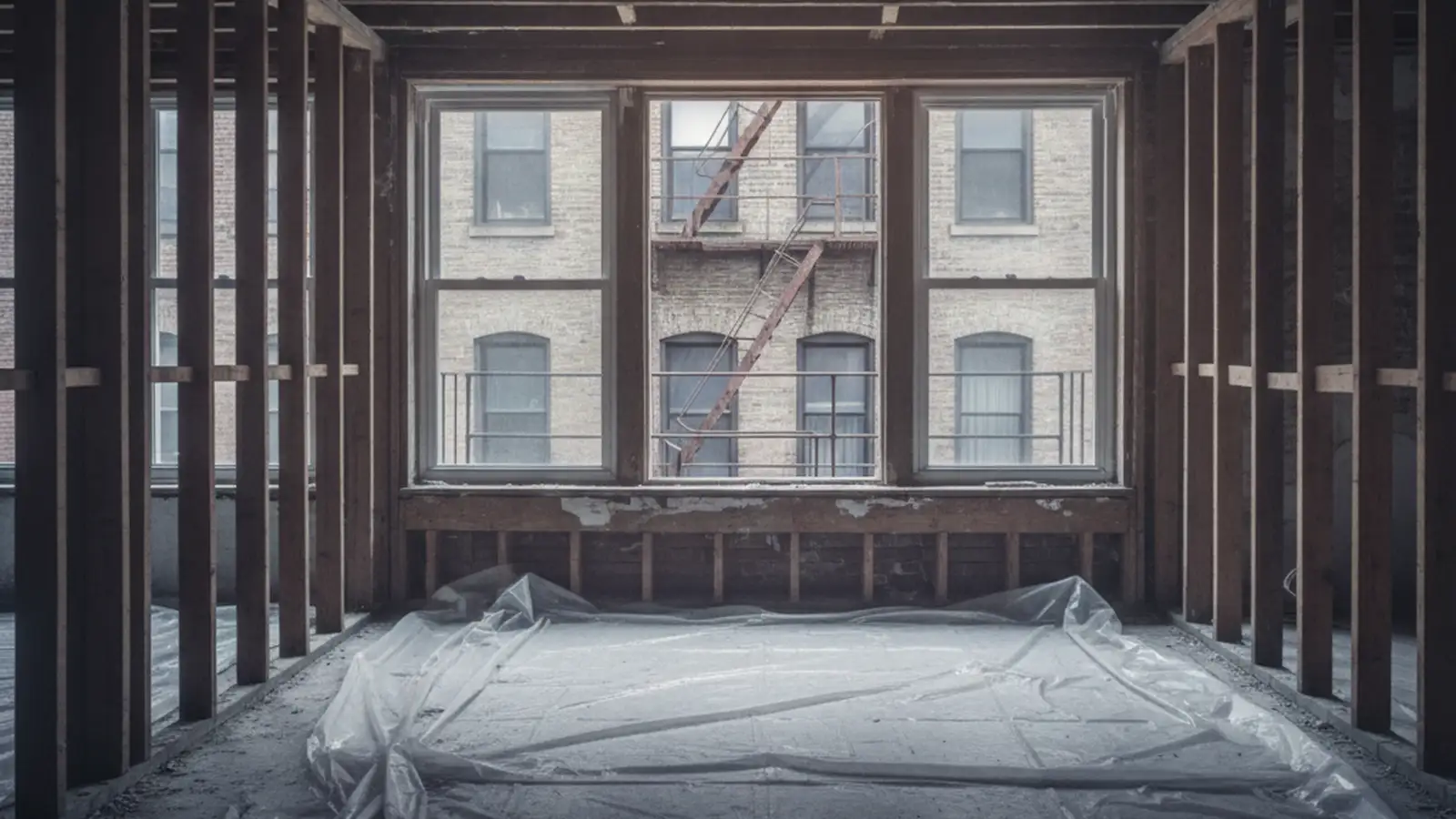
We take a space back to whatever your next stage needs. Bare structure, a clean shell, or something in between, with the parts that are staying protected and untouched.
What comes out, and what stays
Interior demolition is the inside of a building coming out while the building stays up.
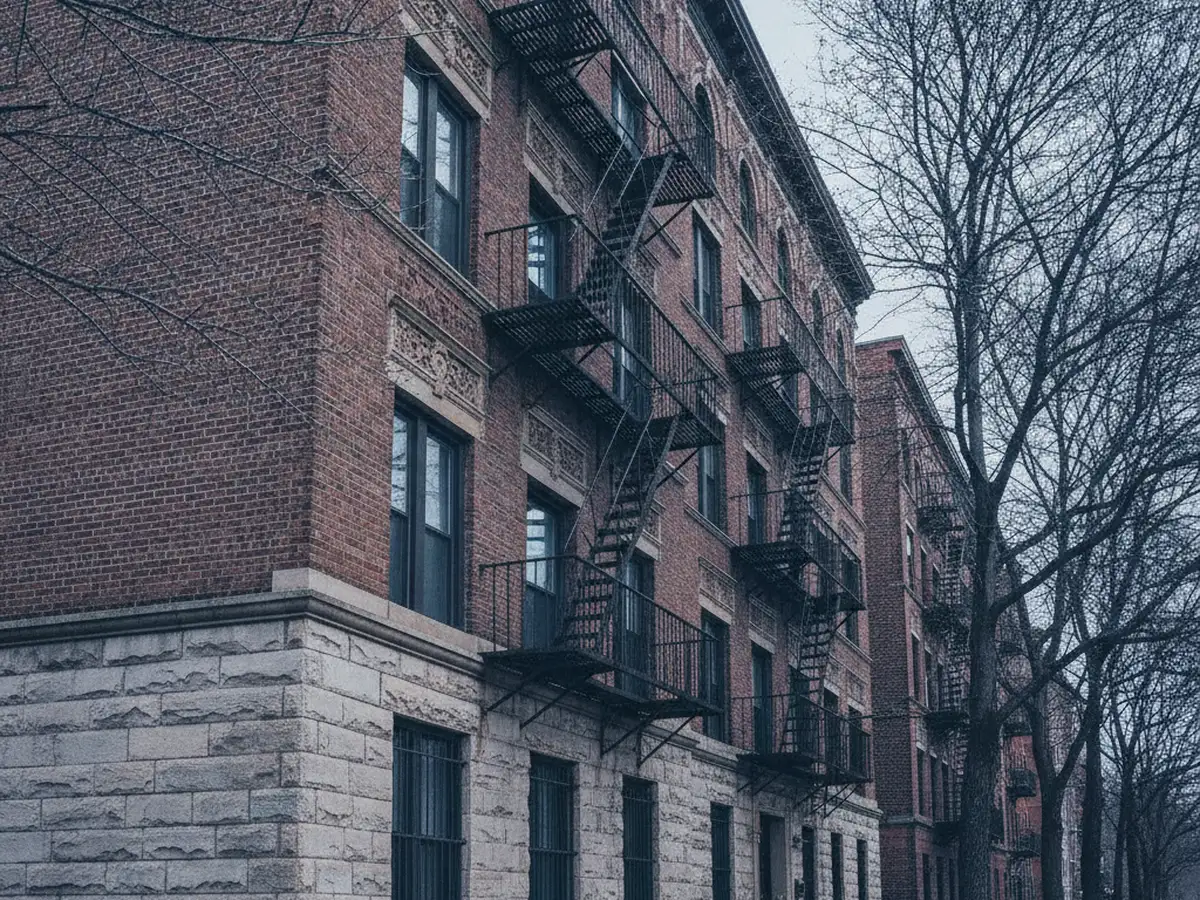
In this borough the material list is remarkably consistent, because so much of the stock went up in the same thirty years. Plaster on wood lath and plaster straight onto brick. Parquet laid over sleepers bedded in a fill nobody has looked at since. Tile on a mortar bed in every bathroom. Cast-iron waste stacks behind the wall. Dropped ceilings put in later, hiding a first ceiling that is still up there.
All of it takes longer to remove than drywall on studs, and none of it is a surprise. The surprise, when there is one, is the layout. A hundred-year-old apartment that has been reconfigured twice does not match the plan somebody hands us, so we mark out what stays with you in the space rather than on paper.
What stays is the structure, the facade, the windows, the risers, and anything you name. Partial is normal. One kitchen and one bathroom out of an occupied apartment is a real scope and we run it as one. In the trade that is selective demolition, and it is most of the interior work in the Bronx.
What decides the programme here
01 The elevator
One car, and it belongs to the residents
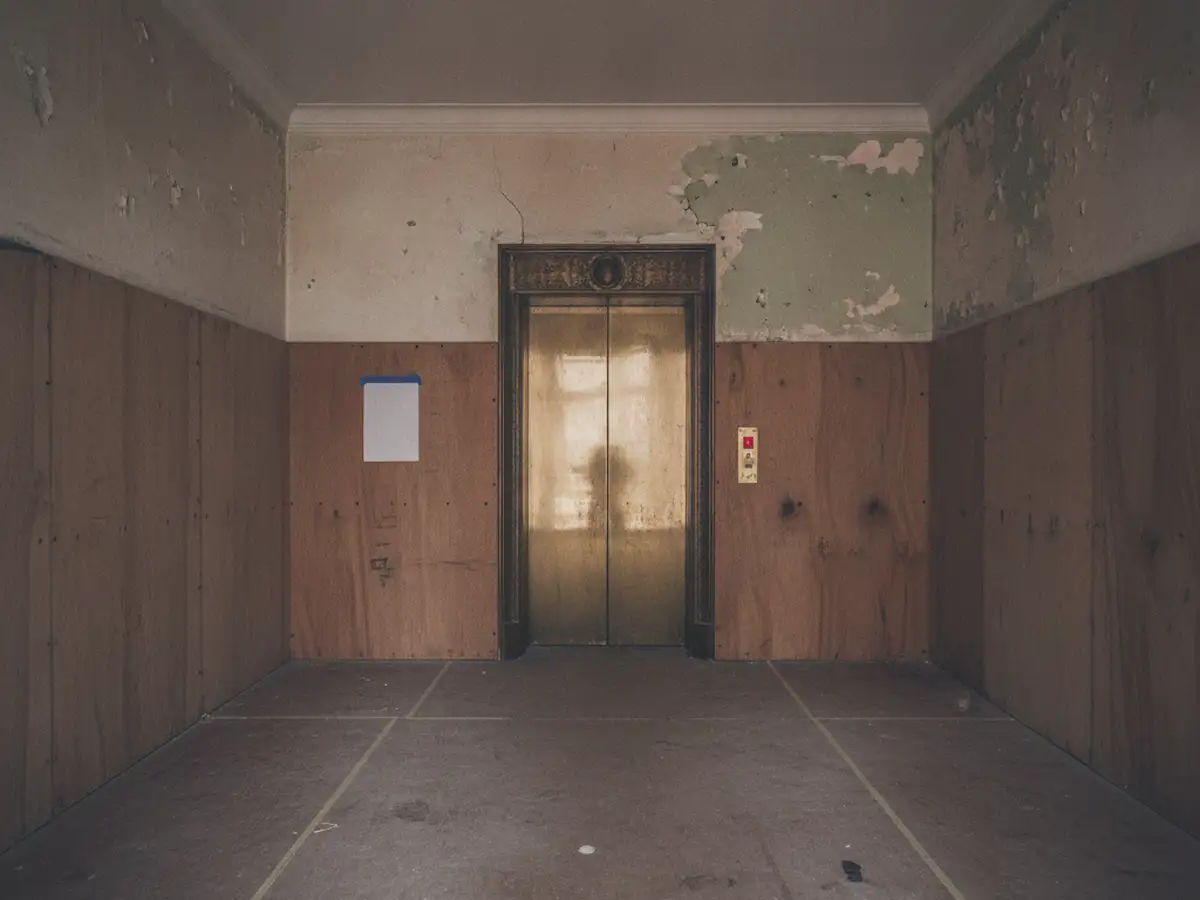
In a six-storey prewar building there is usually no freight elevator. There is one passenger car, and everything from your apartment leaves in it during whatever windows the superintendent releases.
The cab is lined and the lobby floor and the mailbox wall are boarded before the first bag rides in it. Material is broken down, bagged and staged on protected floor inside the work area, then moved in those windows and carted away by a registered carting company. Nothing waits in the lobby or the hall.
A building giving two hours in the morning is a completely different programme from one giving the afternoon, on identical square footage. That is why we ask before we quote.
02 The stair
Buildings with no lift at all
Across the South Bronx and much of the West Bronx the housing is walk-up. There is nothing to book and nobody to ask, which removes the slowest step in the job.
What replaces it is labour. Loads sized to what one person can carry, treads and handrails boarded for the duration, and a crew working as a chain. Slower per ton and entirely predictable, which on a fixed date is worth more than it sounds.
03 The street
Storefronts, and where the container stands
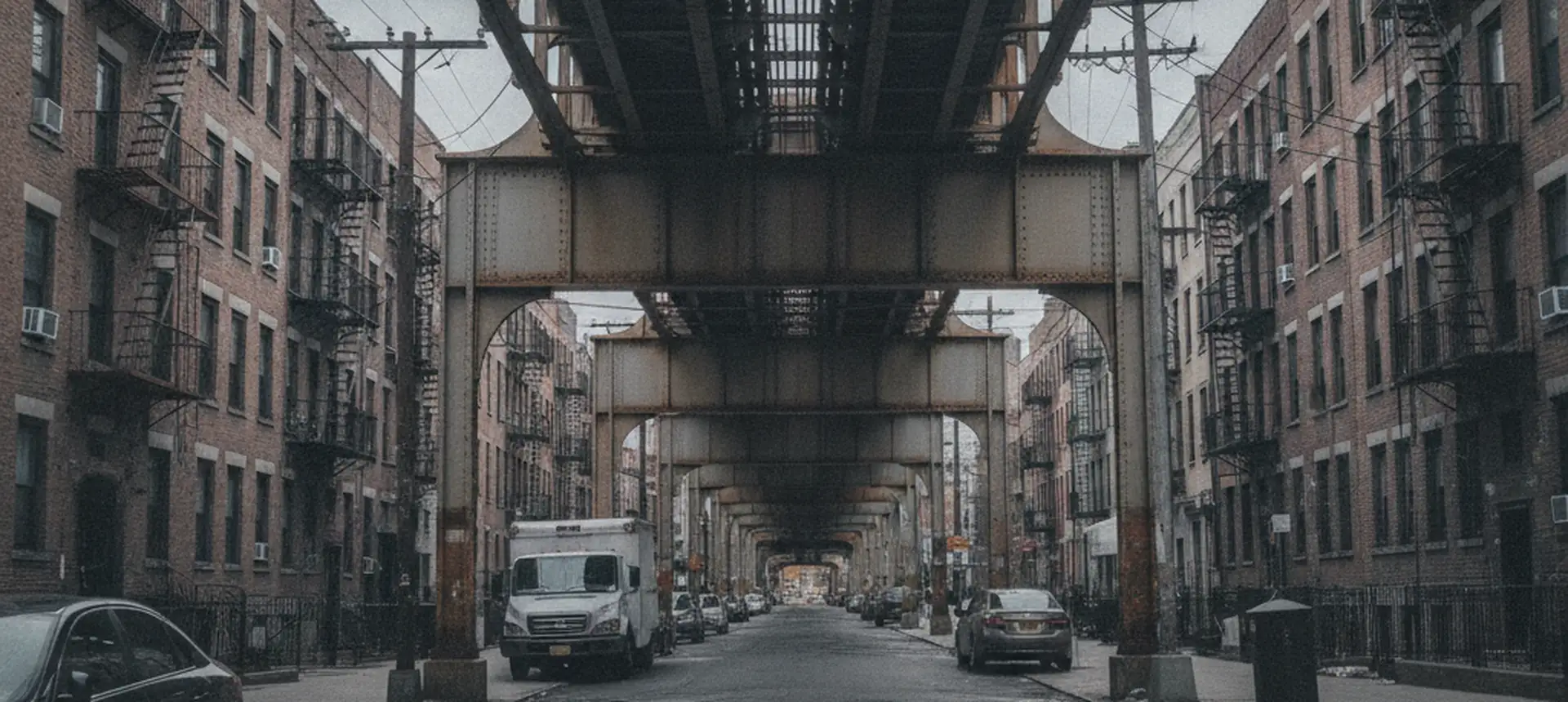
On Westchester Avenue, White Plains Road and Jerome Avenue the unit is a storefront with apartments above it and an elevated structure overhead. There is no dock and no rear service road.
Everything comes out to the curb. Where the container can legally stand, and for how long, decides how the whole job is staged, and it gets settled before we price rather than on the first morning.
Permits and building access, before the first wall
The same sequence, two very different jobs.
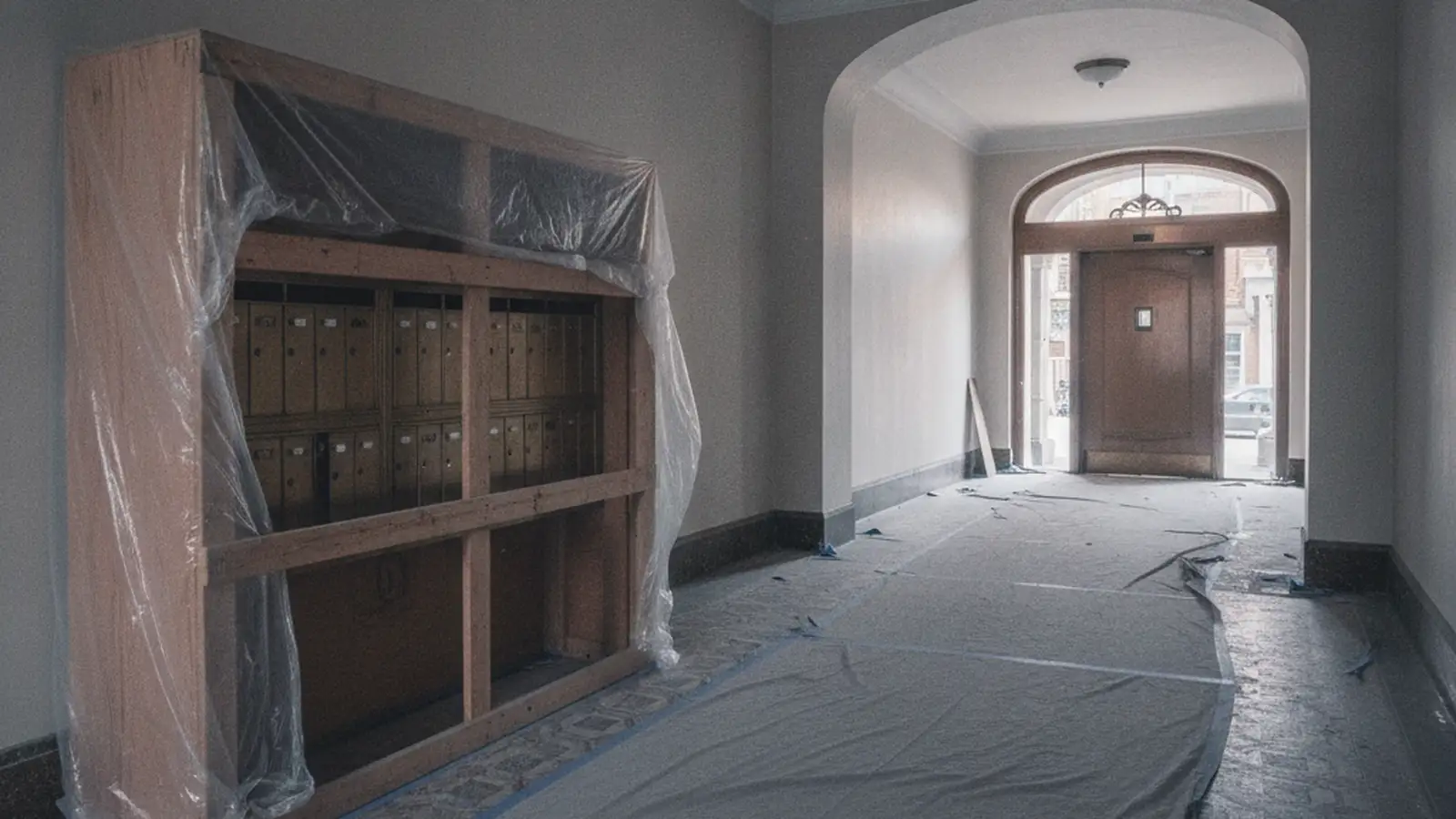
The Bronx runs two completely different versions of the pre-start sequence, and which one you are in is decided by what you own rather than by where you are.
If your job is in a prewar apartment building, on the Grand Concourse, in Van Nest, along Pelham Parkway, in Fordham, Kingsbridge or Norwood, then the building is part of the process. There is an approval to get, a superintendent to arrange things with, and one passenger elevator that everybody in the building shares with you. If it is in a two-family house in Throgs Neck, Pelham Bay, Soundview or Wakefield, or a freestanding house up in Riverdale or Fieldston, most of that disappears. The owner is the approval. What replaces it is the driveway, the container and the neighbour through the wall. The city's part of the sequence is identical in both.
First question: does your job need a filing at all? Not every demolition job needs a Department of Buildings permit, and the answer decides how much of the sequence applies to you. Taking out kitchen units, flooring, a dropped ceiling or fixtures and putting back like for like is generally minor work that needs no permit. Removing walls, changing the layout, touching plumbing, gas, sprinkler or standpipe work, altering egress, or anything structural does, and the filing is made by a registered architect or engineer rather than by the demolition contractor.
There is a Bronx-specific reason to settle it early. A great deal of the borough's prewar stock is plaster on lath over brick, and behind the plaster the arrangement of walls is not always what a floor plan from a later renovation shows. We would rather establish which side of the line you are on before a start date is promised than find out with the plaster off. Where it is not obvious, the design professional decides, and we will tell you honestly on the first call which way we think it goes.
The sequence, in the order it happens
-
Step 1 of 6
The asbestos assessment, if the building predates April 1987
For a building built before 1 April 1987, the city requires an asbestos assessment before the Department of Buildings will issue a permit for work that could disturb material. A DEP certified asbestos investigator inspects the areas the work will touch and files Form ACP-5 with the Department of Environmental Protection if the work is exempt, or an abatement plan if it is not.
Essentially all of the borough's prewar apartment stock and most of its houses predate that date. This is the customer's own filing, it is the most common cause of a late start, and it is the first thing to order.
-
Step 2 of 6
Design and filing, where the work needs it
A registered architect or engineer prepares the drawings and files with the Department of Buildings. The permit issues to the licensed contractor performing the permitted work. Demolition inside a larger renovation is normally filed with it as one job rather than separately.
-
Step 3 of 6
The building's own approval, in a co-op or condo
Where the building has a board there is a second approval that has nothing to do with the city. The alteration agreement sets out what is wanted, usually drawings, insurance certificates, a deposit and a schedule, and it sets the rules the job runs to.
A house owner skips this entirely, which is the single biggest reason the same scope moves faster in Pelham Bay than on the Grand Concourse.
-
Step 4 of 6
Work hours, and a variance if you need one
Construction activity runs 7:00 AM to 6:00 PM on weekdays. Anything earlier, later or at the weekend needs an After Hours Variance from the Department of Buildings, filed a few business days before the first day and covering days inside a fourteen day window.
The rule covers the activity rather than the machinery, so quiet weekend work needs one too. Your building may set narrower hours than the city, and a co-op usually does.
-
Step 5 of 6
Landmarks, on the borough's designated blocks
The Bronx has fewer designated blocks than Manhattan or Brooklyn, and it very much has them. The Grand Concourse, Mott Haven, Longwood, the Bertine Block, Fieldston and parts of Riverdale all carry designations. Inside a historic district, on an individual landmark, or in a building containing an interior landmark, the Department of Buildings may not issue a permit until the Landmarks Preservation Commission has issued a certificate. The trigger is the permit rather than whether anyone can see the work from the street.
For interior work that does not touch a protected feature, which is nearly all interior demolition, that certificate is a Certificate of No Effect. It is issued at staff level, with no hearing, and a complete application is commonly approved in about ten business days. Certain interior work qualifies for an expedited version that returns in about two. It is a step rather than a barrier, and it belongs at the front of the sequence rather than as a surprise after the permit application has gone in.
-
Step 6 of 6
The elevator window, the driveway and the container
The last thing settled and the one that decides the pace. In a prewar building it is the passenger car, because there is usually no freight elevator at all: which hours the super releases it for, how the cab and the lobby floor get protected, and how much can leave in a day.
In a house it is simpler and it moves outdoors. A short driveway will often hold a container off the street. Where it will not, the container stands at the curb under a permit. Either way we settle it before we quote.
Who carries which step
The asbestos assessment, the design filing, the Landmarks certificate and the alteration agreement are the owner's, the design professional's or the building's to carry out. The elevator window, the container and the route out are ours to settle with you and the super before we price.
What we do on the first call is tell you which steps your job triggers and in what order, and which version of the sequence you are in, the prewar building's or the house owner's, so the schedule you plan against is a real one. See how the building stock changes the job across the borough.
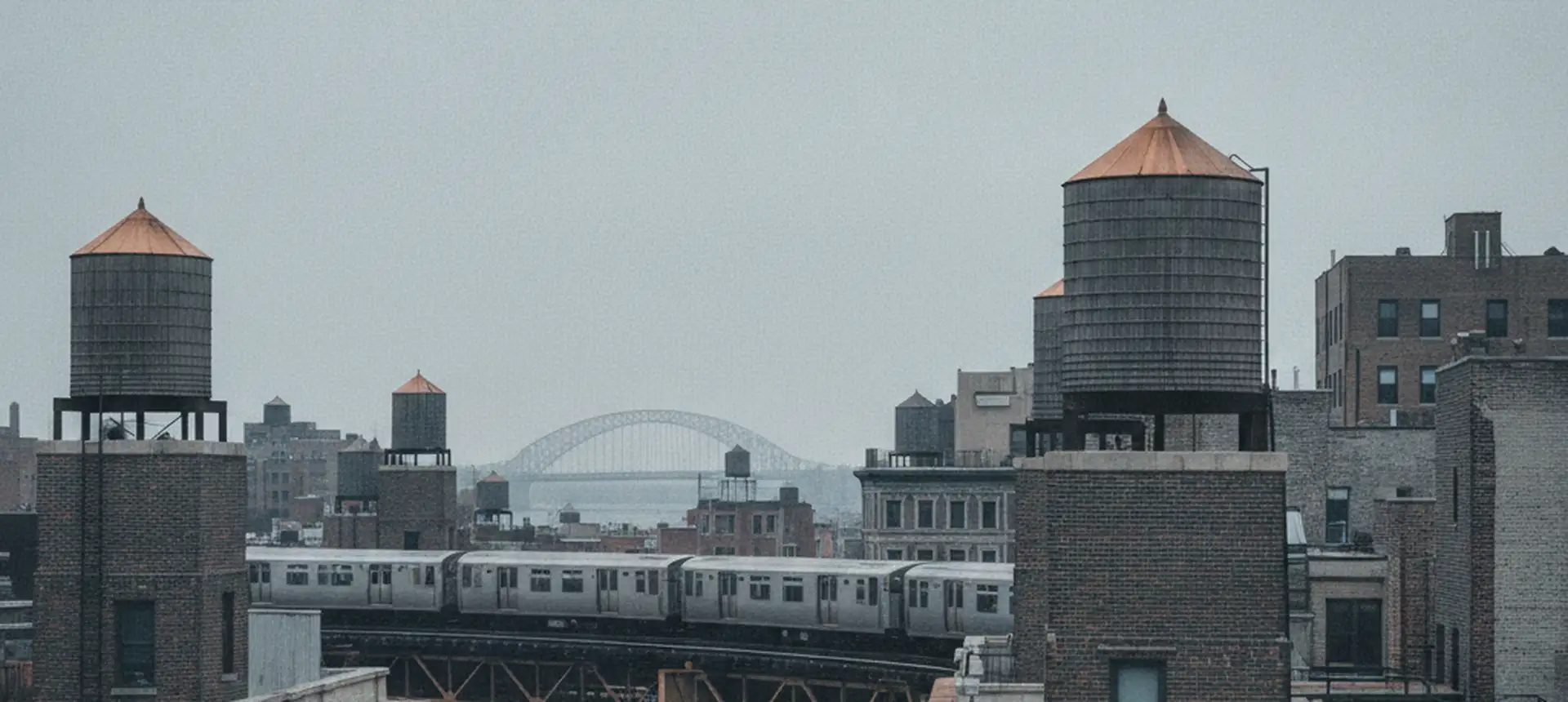
Across the Bronx rooftops
How we work in a live building
The lobby is the front door
Cab, corridors, floors, mailboxes and door frames covered before anything comes down. It is faster to protect a cab than to repair one, and the super sees it first.
Dust control
Openings sealed, negative pressure where it is warranted, and cutting kept wet where the material allows. Neighbours down the hall notice dust long before they notice noise.
Noise in windows
The loud work is grouped and run inside the hours the building and the city allow, so it is predictable for everyone else in the stack.
Daily clear-down
The space is left safe and swept at the end of each day. Nothing is stored in a corridor, a stair or the lobby overnight.
Common questions
What is interior demolition?
Taking out the inside of a building while the building itself stays up. Walls, ceilings, floors, fittings and services come out. The structure, the facade and usually the windows stay.
It is what most people mean when they say a space needs gutting before a fit-out or a renovation, and in the Bronx it is nearly all of the demolition work there is.
What is the average cost for interior demolition?
There is no useful average, because the same square footage can differ several times over in price.
Here the two things that move it most are the plaster and the elevator. A drywall storefront with a container at the curb is straightforward. The same area of plaster on lath, on the fifth floor of a prewar building, leaving through a shared passenger car for two hours a day, with parquet and sleepers to lift, is a much larger job for the same drawing.
We walk the space, price the actual scope, and say which parts could still move once the plaster is off. Tell us your date when you call and we will tell you what we can hold.
Does my job need a Department of Buildings filing at all?
Not every demolition job does, and the answer decides how much of the sequence applies to you. Taking out kitchen units, flooring, a dropped ceiling or fixtures and putting back like for like is generally minor work that needs no permit. Removing walls, changing the layout, touching plumbing, gas, sprinkler or standpipe work, altering egress, or anything structural does.
The filing is made by a registered architect or engineer rather than by the demolition contractor, and in a prewar Bronx building it is worth settling before a start date is promised, because the walls behind the plaster are not always what the plan shows. Describe the building and the work to us and we will tell you honestly which way we think it goes.
Do I need an asbestos assessment before interior demolition can start?
If the building was built before 1 April 1987 and the work needs a Department of Buildings permit, then yes, one has to be filed before that permit is issued. In this borough that describes almost every prewar apartment building.
A DEP certified asbestos investigator inspects the areas the work will disturb and files Form ACP-5 with the Department of Environmental Protection. Where material is present but sits under the DEP thresholds and will not be disturbed, the ACP-5 can still be issued.
It is the customer's own filing and not part of a demolition contract, and the permit waits on it, so order it early.
What hours can demolition work happen in New York City?
Construction activity may be carried out from 7:00 AM to 6:00 PM on weekdays. Anything outside that needs an After Hours Variance from the Department of Buildings, filed a few business days before the first day and able to cover days inside a fourteen day window.
In a Bronx apartment building the city's window is rarely the one that matters. A building with a hundred households will set narrower hours of its own, and on an attached block of two-family houses the real limit is what the neighbours either side will live with. Where the two differ, the building's rules decide your schedule.
Does a historic district mean I need Landmarks approval?
For permitted work, yes, and the approval is usually light.
Inside a historic district the Department of Buildings will not issue a permit until the Landmarks Preservation Commission has issued a certificate. For interior demolition that does not touch a protected feature, that certificate is a Certificate of No Effect, handled at staff level and normally issued within about ten business days.
If your address is on the Grand Concourse, in Mott Haven, Longwood, Fieldston or Riverdale, check the designation before the design is finished rather than after.
What happens to the debris?
Clearing it is part of the job. You do not have to arrange it separately.
Material is broken down, bagged or bundled, and staged on protected floor inside the work area. It moves out in the elevator windows the building gives us, or down the stair where there is no lift, to the loading point. Carting off site is done by a registered carting company and we coordinate the two halves so they line up.
Where a container is needed at the curb, its placement has its own rules about where and how long it can stand, and that is worked out before it arrives. You get the space back swept and clear.